My late Grandmother Lillian Parker Crain was born on July 4, 1902. She lived on Mountain View (Taylors), SC, farms and never held a public job.
She was a patriot but talked more about her love for Jesus and her holiness faith.
When the U.S. asked for her older son to fight Adolph Hitler during World War II, Ma and Pa (Carl) bid their boy farewell, not knowing if they would see him again this side of heaven.
That son, my dad, Jesse B. Crain, reached the rank of sergeant while serving with the 84th Infantry during the Battle of the Bulge (Dec. 1944 to Jan. 25, 1945) — called “the greatest American battle of the war” by Winston Churchill.
That conflict raged in the Ardennes region of Belgium and was Hitler's last major offensive in WWII. An attempt to push the Allies back from German home territory, the Battle of the Bulge ruined the German army and brought the war to an end.
Ma and Pa’s younger son, Fred, worked on their farm for a year after his high school graduation and then worked at Southern Bleachery in Taylors, SC. He probably would have been drafted, but WWII ended on September 2, 1945, before Uncle Fred was called up.
I grew up feeling patriotic during the 1950s. At Mountain View Elementary School, I learned about America history.
America’s 13 colonies, called “United Colonies,” declared independence from England on July 4, 1776. That led to the formation of the United States. By issuing the Declaration of Independence, adopted by the Continental Congress on July 4, 1776, the American colonies cut political connections to Great Britain.
John Adams said, “The general principles on which the fathers achieved independence were the general principles of Christianity.”
Internet sources say, “The U.S. Constitution contains no mention of Christianity or Jesus Christ. In fact, the Constitution refers to religion only twice in the First Amendment, which bars laws ‘respecting an establishment of religion or prohibiting the free exercise thereof.’”
So, were America’s founders Christians?
“While not every Founding Father was a Christian … there is an undeniable history of leaders who’ve been intimately acquainted with the contents of the Bible,” author Robert J. Morgan says.
Can we call America a “Christian nation”?
Supreme Court Justice David Brewer (1837-1910) explained:
“ [I]n what sense can [America] be called a Christian nation? Not in the sense that Christianity is the established religion or that the people are in any manner compelled to support it.
“On the contrary, the Constitution specifically provides that ‘Congress shall make no law respecting an establishment of religion, or prohibiting the free exercise thereof.’ Neither is it Christian in the sense that all its citizens are either in fact or name Christians.
“On the contrary, all religions have free scope within our borders. Numbers of our people profess other religions, and many reject all. Nor is it Christian in the sense that a profession of Christianity is a condition of holding office or otherwise engaging in public service, or essential to recognition either politically or socially.
“In fact, the government as a legal organization is independent of all religions. Nevertheless, we constantly speak of this republic as a Christian nation — in fact, as the leading Christian nation of the world.”
Baptist theologian Al Mohler warns that many have “confused cultural heritage with biblical Christianity.”
“Cultural Christians are deists, pantheists, agnostics, and atheists who adhere to Christian values and appreciate Christian culture,” according to Wikipedia. “This kind of identification may be due to various factors, such as family background, personal experiences, and the social and cultural environment in which they grew up.”
Cultural Christians are not biblical (born again) Christians.
Is Christianity still strong in the U.S.?
According to Wikipedia, “Christianity is the most adhered to religion in the United States, with 65 percent of polled American adults identifying themselves as Christian in 2019, down from 75 percent in 2015. This is down from 85 percent in 1990.” (Remember that poll numbers include Cultural Christians as well as Born-Again Christians.)
Is America a “Christian nation”? Pray, and remember these truths:
“Righteousness exalteth a nation: but sin is a reproach to any people” (Proverbs 14:34).
“Blessed is the nation whose God is the Lord … ” (Psalm 33:12).
Thursday, July 9, 2020

Specialist GEORGE M. LIBBY, My Late Wife's Student
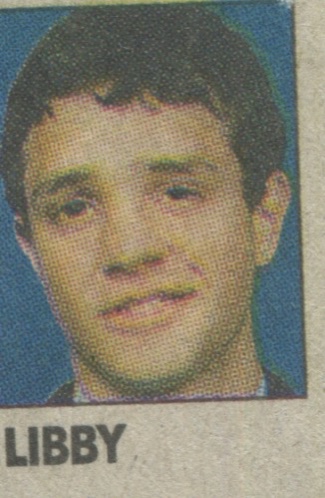
Looking through my late wife Carol’s belongings, I found a clipped article from “The Pilot,” a newspaper we read while living in Southern Pines, NC (1989—Jan. 2018). The headline read, “Soldier Killed in Afghanistan.”
The late John Chappell had written about Specialist George C. Libby. Carol taught Libby in fourth grade at Aberdeen Middle School, Aberdeen, NC.
Libby died Aug. 20, 2007, at age 23, from a noncombat-related incident, the Army said.
“He died when the vehicle he was riding in rolled over during nighttime drivers’ training near Knost, Afghanistan,” Chappell wrote.
Libby was born in Philadelphia and grew up in Aberdeen. He served as an automatic rifleman assigned to 2nd Battalion, 75th Ranger Regiment at Fort Lewis, Wash.
“George was where he wanted to be, doing what he wanted to do when he died,” said his mother, Nell Allen of Aberdeen, in the article. “George was a fine soldier, and I am proud of him.”
Libby studied computer science for two years at Sandhills Community College and enlisted in the Army in March 2005.
His mother said, “George, when he enlisted, decided he was going to be an Army Ranger. I don’t know how many succeed. At some point, they do tough training. Each thing he approached, he would say something like, ‘Only 30 percent finish it.’ He rose to every challenge presented to him. I was so impressed by my son.
“He took on and beat every challenge in his pursuit of becoming a warrior. This is how I see him: becoming the very best warrior he could, for the United States Army. That sounds a little corny, but that’s how I feel.”
Valerie Avent Libby, of Tacoma, Wash., released this statement after learning of Libby’s death:
“What you need to know about my husband is that he was a good and loving person. He died for your freedom, for all of our freedom. Freedom is not free, and it comes at a high price. George paid that price with his life. … George joined the Army because of Sept. 11. He believed in this mission, and I believed in him.”
Libby was on his second deployment in support of the war on global terrorism and was posthumously awarded the Bronze Star.
Surviving also at the time of his death were his father, Thomas M. Libby, Jr.; a brother, Ira Allen Libby, 20; and a sister, Rebecca Lynn Libby, 16.
Saved with the news article was a torn envelope. On that envelope Carol had written, “My Aberdeen Middle School 4th grade student George Libby died on Aug. 20, ’07 at age 23 in the Army in Afghanistan. He was a precious child.”
Monday, May 11, 2020
Living during the Coronavirus 'Divide'
My finances have not been affected directly by COVID-19 (the coronavirus) because I am retired. But some folk are experiencing tough times.
“I heard that we are all in the same boat, but it’s not like that,” someone said. “We are in the same storm, but not in the same boat. … For some, quarantine is optimal. A moment of reflection, of re-connection, easy in flip flops [taking life easy], … for others, this is a desperate financial and family crisis.”
We’re not in the same boat, the writer said, because the coronavirus stay at home policy causes many that live alone to face more loneliness while others have family with them.
“Some want to return to work because they don’t qualify for unemployment and are running out of money,” the writer said. “Others want to kill those who break the quarantine.
“Some are at home, spending 2-3 hours/day helping their child with online schooling while others are spending 2-3 hours/day to educate their children on top of a 10-12 hour workday.”
Some have died from coronavirus; some don’t seem to think it’s a big deal, the writer said. Some have faith in God and miracles. Others say the worst is yet to come.
The writer concluded, “So, friends, we are not in the same boat. … We are all on different ships during this storm, experiencing a very different journey. Realize that and be kind.”
An animation shows Buggs Bunny wearing a medical mask and Daffy Duck without a mask. Buggs puts a poster on a tree. The poster reads “Shut it down.” Daffy Duck slaps a poster over it. Daffy’s poster reads “Open it up.”
That’s how many feel about reopening businesses labeled “nonessential.”
America is suffering a “great divide” over the coronavirus, a virus discovered only months ago. Scientists work feverishly on a vaccine to protect against what some call The Corona.
Some say keeping healthy people “locked down” prevents development of an immune response needed to establish nationwide immunity to coronavirus.
That idea is based on what happens when a disease attacks a herd of animals. To develop a “natural herd immunity,” one lets a virus attack the herd. Some animals die, but others develop immunity to the disease.
Drs. Carl T. Bergstrom and Natalie Dean say, “The coronavirus moved so rapidly across the globe partly because no one had prior immunity to it. Failure to check its spread will result in a catastrophic loss of lives. Yet some … are advising that the most practical course of action is to manage infections while allowing so-called herd immunity to build.”
Those doctors advise against letting “herd immunity” build because many people may die while the herd builds immunity. They indicate that social distancing and staying at home are good, at this time.
Developing immunity against coronavirus requires actually being infected with it. “Prior infection has to confer immunity against future infection,” Bergstrom and Dean say.
On the other hand, Dr. Lee Templeton, a Christian dentist, says many die each year during flu season.
“All medically knowledgeable people realize this is an almost annual occurrence,” Templeton says. “Fear has replaced faith and commonsense. … The news media foments fear using death numbers. … If flu deaths were always on the news, it is likely that panic would result from that too. The Christian worldview has taken a hit in the last 50-75 years. That view holds that faith in God casts out fear.”
How can we exhibit Christian faith during the coronavirus epidemic?
The Rev. Dr. Christian Hofreiter of Austria writes, “In the Old Testament we find very strict quarantine regulations for those suffering of infectious diseases (see Leviticus 13). So, when Christians follow government and medical advice to, say, drastically reduce all social contacts, this is not an expression of unbelief (as though God did not have the power to protect or heal us). Rather, it is a demand of wisdom and, especially, of neighbourly love. The equation is simple and sobering: The flatter the rate of viral infection progresses, the smaller the number of vulnerable people who will die. Wherever we can contribute to that outcome, we should!”
Hofreiter continues, “One of the best things we can do is remember just how great, how good, how strong and mighty, how faithful our God truly is. … Personally, I find it most helpful in such situations to meditate on verses of Scripture that I know by heart, that I think through, pray through, feel through, chew through, carry in my heart, and digest inwardly. For example, the 23rd Psalm. Do you know it by heart yet?”
“The Lord is my shepherd … I will fear no evil: for thou art with me; thy rod and thy staff they comfort me” (from Psalm 23, KJV).
Lay Down Your Worries
A friend from Florida recently rang my cell phone while I was out and about.
“Are you wearing a mask?” she asked.
“No,” I said.
“Down here, if you go out without a mask and a policeman sees you, you get a fine, and if you go out again without a mask, and he sees you, you get two days in jail.”
People are wearing masks in attempts to avoid a coronavirus that’s spread by “human-to-human transmission via respiratory droplets.”
“The 2019–20 coronavirus pandemic is a pandemic of coronavirus disease 2019 (COVID-19) caused by the severe acute respiratory syndrome coronavirus 2 (SARS-CoV-2),” according to wikipedia.org. “The disease was first identified in Wuhan, Hubei, China in December 2019.”
I drove in the rain to the Dill Creek Bi-Lo at 8:00 a.m. on Thursday, April 23, 2020. (Seniors get a special hour to shop from 8-9:00 a.m., M-F, at Bi-Lo because of the coronavirus scare.)
I tried to stay a social distance (six feet) away from shoppers.
Finding no iceberg lettuce, I bought cookies, figuring I’d wait until the coronavirus died down before going on a diet.
Some people are gaining weight during the coronavirus outbreak.
“Overeating is a mechanism for coping with whatever negative emotions people are experiencing in their lives, just like excessive sleep, heavy exercise, and alcohol are coping mechanisms,” someone said.
The coronavirus outbreak has stirred up fear and worry in many folk. I come from a long line of worriers and need to “have a little talk with Jesus” quite often. If I don’t pray, I worry.
“God created us as emotional people,” Tim Allchin says. “Our emotions are given by God to put us ‘into motion.’ Fear is a God-given emotion. Anxiety is what we feel when our bodies respond to the emotion of fear. Worry is the thought process that mulls over and gives power to the object of our fear.”
Everyone worries.
“Jesus taught us to examine our fear, worry, and anxiety as clues into who we worship or what we worship in any given moment,” Allchin says.
My anxiety reveals what I value, Allchin says, and it reflects my view of God.
Jesus said, “Therefore I say to you, do not worry about your life, what you will eat or what you will drink; nor about your body, what you will put on. Is not life more than food and the body more than clothing?” (Matt. 6:25).
Tim Keller writes, “Worry is not believing God will get it right, and bitterness is believing God got it wrong.”
Keller reminds us that “it takes pride to be anxious.” My anxiety may indicate that I think I know more than God knows and will trust my own judgment before I trust God.
My anxiety is related to my “trust level” in God, Allchin says, adding, “God calls me to overcome anxiety by keeping my focus on trusting Him with my trials.”
I worry most when my focus is on myself. Some introspection is helpful, but too much leads to worry and depression. We may agree with this statement: “There’s always someone worse off than I am.” But when we worry, we often quit reaching out to others.
“My anxiety is redirected best by compassionately serving others,” Allchin says. “One of the consistent themes throughout the gospels is the call to care for those in need and share the good news of what Jesus has done for us.”
Some Faith Temple Church folk are “self quarantined” because they have health conditions that could make them more likely to suffer complications if they become affected by a coronavirus. Pastor Burrows contacts them, but other friends can reach out to them via cards, phoning, e-mailing, or Facebooking.
Barbara Robertson (my fiancee) and I drove recently to my daughter Janelle’s house. Janelle and Terry, her husband, live in Taylors, SC. Terry works from home, and Janelle teaches first grade at Blythe Elementary. From her home, Janelle maintains some “virtual contact” with her students and their parents because Greenville County Schools are closed for this school year because of the coronavirus. From the road, I called on my cell phone.
“Janelle, we’re outside in the car,” I said. “We’re not here to come in. We just want to say hello from the car.”
Janelle soon popped just her head out the house’s front door.
“How are y’all?” she said. “I’m not dressed too well.
We exchanged greetings and then motored on out of her subdivision. Seeing Janelle’s face seemed to take a few worries off my mind. I’ll need to give the rest of my worries to the Lord.
Coronavirus and Faith
Some houses of worship are staging drive-in meetings where folk sit in cars and listen over radios or to loud-speakers as pastors preach. Some members honk their horns instead of saying amen.
The coronavirus outbreak has changed America and the world.
“Crises breed change,” said Allan Lichtman, a historian at American University.
History proves that statement.
Mark Z. Barabak, writing for The Los Angeles Times, says, “An ‘old age’ pension was part of the 1912 Progressive Party platform . . . Yet it wasn’t until August 1935, after the economic ravages of the country’s near-collapse [the Great Depression] left millions of Americans destitute, that President Franklin D. Roosevelt signed the Social Security Act into law.”
Now, many retirees depend on Social Security.
Barabak says World War II showed America that we needed a better foreign policy. He says that the 9/11 attacks showed weaknesses in America’s security programs and that the Great Recession (2008) showed, the dangers of “unbridled financial speculation.”
How will the coronavirus pandemic change us? Will we get back our lifestyles?
Politico magazine states, “For many Americans right now, the scale of the coronavirus crisis calls to mind 9/11 or the 2008 financial crisis — events that reshaped society in lasting ways, from how we travel and buy homes, to the level of security and surveillance we’re accustomed to, and even to the language we use.
“A global, novel virus that keeps us contained in our homes — maybe for months — is already reorienting our relationship to government, to the outside world, even to each other.”
“We know now that touching things, being with other people and breathing the air in an enclosed space can be risky,” says Deborah Tannen, professor of linguistics at Georgetown Univ. “The comfort of being in the presence of others might be replaced by a greater comfort with absence, especially with those we don’t know intimately.”
How will Christian fellowship be affected?
“Religion in the time of quarantine will challenge conceptions of what it means to minister and to fellowship,” says Amy Sullivan. “But it will also expand the opportunities for those who have no local congregation to sample sermons from afar.”
In other words, people will have opportunity to listen to sermons by speakers on the internet.
What is happening to the rich and the poor during the coronavirus plague?
“The inequality gap will widen,” says Theda Skocpol, a professor of government and sociology at Harvard. “Discussions of inequality in America often focus on the growing gap between the bottom 99 percent and the top 1 percent. But the other gap that has grown is between the top fifth and all the rest — and that gap will be exacerbated by this crisis.”
Sadly, the old saying about the rich getting richer and the poor getting poorer may apply during this coronavirus time.
How will folk be affected mentally during this time of “social distancing” — staying six feet away from each other?
Ed Yong, writing for The Atlantic, says, “After infections begin ebbing, a secondary pandemic of mental-health problems will follow. At a moment of profound dread and uncertainty, people are being cut off from soothing human contact. Hugs, handshakes, and other social rituals are now tinged with danger. People with anxiety or obsessive-compulsive disorder are struggling. Elderly people, who are already excluded from much of public life, are being asked to distance themselves even further, deepening their loneliness.”
As our society changes, Jesus Christ is still our answer — always.
“Jesus Christ [is] the same yesterday, and today, and for ever,” (Hebrews 13:8 KJV).
Whether truth is communicated in person or “streamed” by Facebook, it’s still the truth. Our hope is in our Lord Jesus Christ.
“Do not be anxious about anything, but in everything by prayer and supplication with thanksgiving let your requests be made known to God. And the peace of God, which surpasses all understanding, will guard your hearts and your minds in Christ Jesus” (Philippians 4:6-7 ESV).
Monday, January 20, 2020
Visiting Aunt Frances in Assisted Living

On Friday, Jan. 17, 2020, I drive to see Aunt Frances Crain at Spring Park, an assisted living facility in Travelers Rest, SC.
I sign in on the foyer sheet and walk a long hallway to the memory care portion of the large Spring Park facility. A slender young lady with a pull-along suitcase holds the door to the memory care unit. Because she lets me in, I don’t have to punch in the four-digit number in order to enter. She heads off with her pull-along.
I don’t see Aunt Frances Crain in the sitting area, so I walk toward her room. The young lady I’d just seen is standing at Aunt’s door, knocking. The memory care supervisor, Nicki, tells me that the young lady is there to give Aunt Frances an ultrasound test on a lower legs that tends to swell. I’ll have to wait to see Aunt.
“Okay,” I say, and I sit on a bench near Aunt Frances’ room.
In maybe 12 minutes, the young lady exits Aunt’s room and walks toward me.
“She’s okay. No blood clot,” the nice young lady says, as she hurries past.
“Thank you,” I say.
I knock on Aunt’s door and she lets me in. She mentions being lonely and says she’s glad I came. She and my late Uncle Fred had no children. We sit and talk about old times — she remembers those pretty well. She sits in her recliner. I sit in the one Uncle Fred once used. His memory was good, but he entered the memory care in order to stay with Aunt Frances. He passed on Feb. 21, 2018.
Aunt Frances talks about her childhood.
“When we lived near your mother [Eva Fowler Crain], we was the only family that didn’t own our home,” Frances says. “We rented. Daddy was a share-cropper. He and Mother raised six children. I was the youngest. I don’t know how they did it.”
“McDonalds owned their house,” Frances continues. “He owned a store in town. And there was the Bradleys. Mr. Bradley was a supervisor in the mill. They had two children: Ophelia and Daffen (a boy). They’d drive to town on Saturdays. We’d see them go by. They sort of seemed above us in a way. We seemed kind of out of place. Everybody owned their own place but us. We were renters. The Moons owned their house. Mr. Fowler drawed a pension from the Spanish-American War. He kept a pretty new car. He drove a Huson, a big car. Me and Mary would ride to Sunday school at Double Springs Baptist Church with the Fowlers.
She continues, “Eva and Edna buddied with me and Mary. Eva was older than me but we were good friends. Mary was over three years older than me. Edna was younger than Eva, but Edna wanted to buddy with Mary. Seems like Edna wanted to be older than she was.”
(Eva Fowler Crain was born in April 1921. Frances Hawkins Crain was born in April 1927. Edna Fowler Sloan was born in 1926. Mary was about three years older than Frances. Eva and Frances were good friends. Mary and Edna were good friends. The four all buddied together.)
“Where did you live first during your life?” I ask.
“We lived up on Hwy. 25,” Frances says.
“Where’d you go to school?”
“Was it Belview?” she says, adding, “Mary finished school when she was 15. She was too young to get a job, so she worked on the farm. She started school early. They say she got up one morning and fixed her a lunch and put it in a sack and said, 'I’m going to school and I don’t mean maybe!'”
Frances laughs. I laugh.
“I wasn’t old enough to get a job at Southern Bleachery when I graduated from Mountain View School [1944]," she says, "but I went down to the mill. You had to stand outside a fence. The boss man came there and said to me, ‘You don’t look 18.’ I said, ‘Don’t I look like it?’ He said, ‘Come on with me.’ He took me to an office and told a lady, ‘Write her up.’ That meant write me up for a job. I didn't tell a lie. I just said, 'Don't I look like it.'"
“I guess they needed you because so many men were in World War II,” I say.
“Yes, that’s right,” Frances says. “And they hired me because Mary had made them a good hand. She was already working there.”
We talk a little longer.
“How is Carol?” Frances asks.
“She’s fine,” I say.
I had hesitated for a second before speaking, and Frances picked up on that. I usually say Carol’s fine because where she is, she is fine.
“Is Carol passed on?” Frances says.
“Yes,” I say. “She’s fine in heaven.
“I thought I remembered that,” Frances says, with a worried look. “There was something in the way you said ‘fine’ that made me think of that.”
“I’ll tell you this, also,” I say. “My sister, Shirley, passed on.”
“When?” Frances says. “Why didn’t I know about it?”
“It just happened on Dec. 27,” I say.
“Well, why didn’t Fred and I know about it?” she says.
I tell her that Uncle Fred already passed on, also, and she then remembers that he did. (I don’t usually correct her on who has passed on. Aunt asks me many times about Carol and I just say, “She’s fine.”)
We talk a little longer, and I tell her I have to go. We stand and I hug her close and pray for her. She seems so tiny and frail. She says “yes” to some of the things I pray about. After the pray I lean down and kiss her on her head. She kisses me on the cheek.
“Steve, you’ve been like a son to me,” she says.
“And you’ve been like a mother to me, Aunt Frances,” I say.
We both shed tears.
“Do you want to go down to the sitting room?” I ask.
“Yes, I’ll go,” she says. “Let me take my sweater. Let’s see . . . do I have my key? Yes, there it is, around my neck.”
We shut the locked door, and I take her hand. We walk the hall to the sitting area, where four or five residents sit and watch TV or snooze.
An aide and a nurse, dressed in white, are attending to a gentleman near the TV. I see an empty rest-chair a few feet away.
“Is anyone using this chair?” I ask.
“No,” the nurse says, smiling.
I move the chair slightly, and Aunt Frances sits. I tell Aunt Francs “goodbye” again and walk away. As I go, I hear Aunt Frances say proudly to the nurse, “That’s my nephew.”
Twenty-five feet from Aunt Frances, I punch the four-digit number, wait 12 seconds for the memory-care door to open, and move into the hallway that leads to the outside world. I head to my car and drive away, thinking about Aunt Frances saying to the nurse, “That’s my nephew.”
Thursday, January 16, 2020
Winter's Lovely Bare Trees
During springtime, trees clothe themselves with leaves of various tints and shades of green. Did you know the human eye can perceive more variations within the green family than within any other color group?
Leaves are beautiful, but there’s something about bare trees in winter that I like.
Poet Samuel Menashe said this:
When one sees the tree in leaf
One thinks the beauty of the
Tree is in its leaves,
And then one sees the bare
Tree.
Bare trees remind me of the studs of a house before drywall is hung on them.
While my family lived (for 28 years) in Southern Pines, NC, I saw — what else? — a lot of tall pines. The Sandhills of NC is fairly flat. Ft. Bragg, not far from where we lived, was home to 45,000 soldiers. Once, while driving to Fayetteville, I looked into the woods on Ft. Bragg’s property and saw soldiers and tanks camouflaged so well that I almost missed seeing them. Soldiers and equipment blended with trees.
Joyce Kilmer, born on Dec. 6, 1886, wrote this famous poem called “Trees.”
I think that I shall never see
A poem lovely as a tree.
A tree whose hungry mouth is prest
Against the sweet earth's flowing breast;
A tree that looks at God all day,
And lifts her leafy arms to pray;
A tree that may in summer wear
A nest of robins in her hair;
Upon whose bosom snow has lain;
Who intimately lives with rain.
Poems are made by fools like me,
But only God can make a tree.
Kilmer died at age 31. As a U.S. soldier, he was struck down by a German sniper’s bullet on July 30, 1918.
Did you know that trees are mentioned in the Bible more than any living thing other than God and people? (I found most of the following truths about trees at christianity.com.)
“Trees are the oldest living things on earth. There are trees alive today that were already ancient in the time of Christ.
“There’s a tree on the first page of Genesis, the first Psalm, the first page of the New Testament, and the last page of Revelation.”
Noah received the olive branch. Abraham sat under the oaks of Mamre. Moses stood barefoot in front of the burning bush. Zacchaeus climbed the sycamore. A blind man saw people as if they were trees walking after Jesus prayed. The disciples gathered on the Mount of Olives. The apostle Paul wrote that if we observe God’s natural world, we are without excuse for knowing God. Paul wrote that Gentile Christians are like branches grafted into Israel’s tree trunk.
Isaiah used symbolism about plants when he talked about Jesus.
“For he shall grow up before him as a tender plant, and as a root out of a dry ground . . . ” (Isaiah 53:2-3).
Jesus grew up in a carpenter’s home. He talked about seeds of faith and said the kingdom of heaven was like a tree.
He said, “I am the true vine, and my Father is the husbandman [gardener].”
Jesus’ favorite place to pray was an olive grove. And he died on a tree.
“And I, if I be lifted up from the earth, will draw all men unto me, ” Jesus said.
“Christ hath redeemed us from the curse of the law, being made a curse for us: for it is written, Cursed is every one that hangeth on a tree” (Galatians 3:13).
Here are the lyrics to “He Grew the Tree,” written by Chuck Lawrence in 1982:
He molded and built a small lonely hill
That He knew would be called Calvary
Then he made the seed that would grow to be
Thorns that would make His Son bleed
Then He made a green stem, gave it leaves and then
Gave it sunshine, and rain, and sheltered it with moss
And He grew the tree, that He knew would be
Used to make the old rugged cross
(Chorus) And nothing took His life
With great love He gave it
And He was crucified on a tree that He created
With great love for man
God stayed with His plan
And He grew the tree so that we might go free
With tears in His eyes, God looked down through time
Saw Him spat upon, rejected, and mocked
Still He grew the tree that He knew would be
Used to make the Old Rugged Cross
I can hardly look at a large bare tree during wintertime that I don’t think of the song “He Grew the Tree.” Thank you, Lord, for your love for us. Amen.
Subscribe to:
Posts (Atom)