Popular Posts

Monday, September 28, 2020

ENCOURAGEMENT: We All Need It and Need to Give It

 Pastor Raymond D. Burrows of Faith Temple Church, Taylors, SC, spoke on “Encouragement” during the Aug. 26, 2020, Wednesday night service at the church. 

He read two passages: 

The first Scripture, 1 Sam. 18:1-5, tells that after David killed Goliath, a giant who challenged Israel, David walked into King Saul’s presence — carrying the head of Goliath! Saul questioned David, and Saul’s son, Jonathan, also listened.

“And it came to pass, when he [David] had made an end of speaking unto Saul, that the soul of Jonathan was knit with the soul of David, and Jonathan loved him as his own soul. …

“Then Jonathan and David made a covenant, because he loved him as his own soul.   

“And Jonathan stripped himself of the robe that was upon him, and gave it to David, and his garments, even to his sword, and to his bow, and to his girdle [belt].” 

Pastor Burrows read Acts 4:34-37:

“Neither was there any among them that lacked: for as many as were possessors of lands or houses sold them, and brought the prices of the things that were sold, and laid them down at the apostles’ feet: and distribution was made unto every man according as he had need.  

“And Joses, who by the apostles was surnamed Barnabas, (which is, being interpreted, The son of consolation,) a Levite, and of the country of Cyprus, having land, sold it, and brought the money, and laid it at the apostles’ feet.”

“Down through these years, Beloved, there is a subject that is kind of near and dear to my heart,” Pastor Burrows said. “It is the ministry of encouragement.” 

He gave five points about encouragement:

1. Everyone needs encouragement at periodic intervals of life. There are no exceptions — old, young, and in-between are needy. 

2. Everyone can be used of the Spirit to encouragement another person. Everyone. 

“There was a time that King David encouraged himself because all the circumstances were, at that moment, aligned against him,” Pastor Burrows said. “So, we are able to do so for one another, or for ourselves.  

3. Encouragement should be periodically extended.

“As the Lord would give you opportunity, take advantage of it,” Pastor Burrows said.

4. It helps to maximize the potential abilities in another person, whenever you encourage.   

“It might be a child; it might be a fellow worker,” Pastor Burrows said. “But whenever that is done, the abilities of that person often escalate.”   

5. Encouragement dispenses of discouragement.
  “It sort of makes discouragement evaporate or go away,” he said.   

Jonathan was slightly older than David, Pastor Burrows theorized, though probably they were not too different in age. Perhaps Jonathan sensed that David would become king of Israel, though Jonathan was “in line” for the throne.

Jonathan was used mightily to encourage David and proved partly responsible for what David became and accomplished in life, Pastor Burrows said.

“You hold the ability to elevate someone else to a new level, simply by encouragement,” he said. “To encourage, you have to think about the welfare and interest of another person … you forget about yourself, your present situation, etc., and the focus goes to another person.” 

He told about his parents taking his two brothers and him to see his grandparents who “came alive” because of the boys’ childhood visits. The younger people’s presence encouraged the old folk. 

He told of hundreds of hours that he spent, over the years, on the telephone. The receiving person often said, “Thank you for calling. I feel a little better.” 

“May we never forget the power of that virtue called encouragement,” Pastor Burrows said. “Lord, grant me the privilege to be an encourager.”  

He added, “There is a tendency among us to take people for granted — or kind of allow those moments when we can minister into another person’s life to pass through our fingers.”

When you receive encouragement, what should be your response?

“That there would be this ability to reciprocate, to bless, to lift, and to encourage virtually every person you come in contact with,” Pastor Burrows said.

He referred to Barnabas, the “son of consolation” (encouragement) as a person who encouraged the early church, endorsed Paul when the Church was skeptical of Paul, and encouraged John Mark who wrote the Gospel of Mark. 

“You can easily remember the people who lift you,” Pastor Burrows said. “They have a warm place in your heart and mind. They may have left us, but we still love and appreciate them.” 

Saturday, August 22, 2020

STAND IN THE GAP


Time: June 1970

Place: Ft. Jackson, SC.  

The tall, lanky young man who entered our barracks had a “lean and hungry look.” Our drill sergeant introduced him to me. 

In basic training for only a few weeks, I had been placed in charge of a platoon of 35 or so fellow trainees housed in our barracks.  

I probably was picked to serve as an “acting sergeant” over a platoon because I’d taught school for a year and, at age 23, was older than most draftees or recruits.

We were several weeks into our 8-week training program, so I wondered why the stranger — let’s call him “Angler” — was “recycled” into our company made up of five platoons.

The Army recycled men during basic training if they failed to perform physical training to an expected level. Recycled GIs had to return to an earlier part of training and move from company to company until they met standards or were discharged. Angler appeared physically fit, so I wondered if his problem was mental or social.     

Angler was left-handed and said he was a boxer. His large hands dangled from long arms. He seemed to fit into our platoon, but there was an edginess about him and, to me, his eyes appeared wolf-like. 

Within days after Angler’s arrival, I was summoned to do some work for the first sergeant. While I was away, Angler began picking at a young, handsome Spanish trainee I’ll call “Diaz,” a man smaller than Angler.

I learned that the two men ended up outside, fighting on the sandy lot located between our barracks and the next. Diaz went to the hospital. The MPs probably detained Angler. 

When I returned to the barracks, fellow trainees told me what happened. 

“Why didn’t you stop the fight?” I asked.

They gave no good answers.  

Tensions rise during basic training. There were other confrontations, especially toward the end of the training cycle, but the fight between Angler and Diaz was the worst.

Late that night, I saw Angler when he returned for his possessions.

“Why did you keep on hitting Diaz?” I asked.

“He kept on coming back,” he said.

Angler may have been recycled again, but I hope they threw him out of the Army. He seemed to be a lone wolf, looking for someone to sucker into a fight, looking for a man on which to vent his devilish anger.

The next day, Diaz returned for his belongings and to be recycled. His face evidenced blows to the cheekbones, the chin, and the forehead. Where Angler’s fists connected, Diaz’s skin had split, and an Army doctor had sewn up those long cuts with large stitches. 

Diaz’s face often appears in my mind. I hope he was later able to undergo plastic surgery.

When I think about Diaz and Angler and the men of our platoon who trained during the Vietnam Era, I think about the phrase “stand in the gap.”

In Ezekiel 22:30, the prophet says on behalf of God, “I sought for a man among them who would make a wall, and stand in the gap before Me on behalf of the land, that I should not destroy it; but I found no one.”

During Old Testament times, cities had walls surrounding them to protect inhabitants from enemies. If a city wall had a breach (a gap) in it, an enemy could invade the city.

Ezekiel wrote his message during a time when Israel had wandered far from God, and “God was looking for someone who would stand between him and the people in the gap of their faithlessness and disobedience,” someone said.

“Standing in the gap” is often referred to in the matter of praying for or “interceding” for someone. Intercession or intercessory prayer is the act of praying to God on behalf of others. The word “intercede” comes from the Latin “inter” meaning “between” and “ced” meaning “go.” So it literally means “go between.” 

But the term “stand in the gap” has become an idiom commonly used by the general public to mean “to expose one’s self for the protection of something; to make defense against any assailing danger; to take the place of a fallen defender or supporter.” 

Diaz needed someone to stand in the gap for him. He needed a man to step up and stop the fight that would scar his face. No one stood in the gap for him.

Is someone you know in a fight with Satan? Can you do something to help? Will you stand in the gap for that person?

Saturday, July 25, 2020

CHURCH: In-Person or Online?


Paul says we should not neglect to meet together … but “encourage one another, and all the more as you see the Day (of Jesus’ return) drawing near.”
 
Should we meet together in person, or is meeting together on computers okay?
 
Faith Temple Church (FTC), Taylors, SC, streams its major services on Facebook Live on the internet.
 
The COVID-19 (coronavirus) pandemic led FTC to connect with members — some with health issues — who feel they risk too much to attend live services.
 
Internet church, online church, or cyberchurch refer to ways Christian groups use the internet to present activities, according to Wikipedia.
 
“Internet-based Christian communities, better known as online churches or internet churches, began gaining popularity in the early 2000s,” says Wikipedia.
 
A 1996 study recommended that churches establish their presence in cyberspace or lose touch with many members and risk losing the ability to advise them in an era of technological growth. Churches were urged to establish an electronic presence before it was too late.
 
Many internet churches came from brick-and-mortar churches that offered an alternative to meeting in a church building. They are still criticized for their lack of human connection.
 
Online church offers convenience to folk who are isolated and unable to attend an in-person church service, notes Wikipedia.
 
Religious pollster George Barna sees Cyberchurch as one of the future macro-expressions (large scale forms) of church in the future.
 
Some issues for online churches:
 
One problem is the digital divide. The digital divide creates two groups, the rich and the poor, on the basis of access, or lack of access, to new information and communication, says Wikipedia.
 
Another concern is that the internet may encourage a consumer approach to faith. People may pick and choose, customizing their beliefs.
 
Many believe the internet can not replace in-person worship.
 
Some say internet church is VIRTUAL church.
 
What does the word virtual mean?
 
“The definition of virtual is something that exists in the mind, exists in essence but not in fact or created by a computer,” someone said.
 
An example of virtual is an imaginary friend.
 
But a friend you meet online (on the internet) can also be called a virtual friend, one you communicate with by internet relationship.
 
That’s confusing: In one case a virtual friend is called an imaginary friend, but in another case, a virtual friend is a real person you meet on the internet.
 
Some things we refer to as virtual may seem virtual but actually be real — it’s just that they are transacted online.
 
Online church is real. It’s real church carried out online. But, for some folk, online church may not seem as real as church done in-person.
 
Regardless of the confusion, online church is real in today’s technology-driven age.
 
Vanco, a business that aides churches, recently posted this headline: “Turning Your Physical Church into a Virtual Church — why every church should have virtual worship, now and later.”
 
In that ad, Vanco wrote, “For your members and guests, your church is a key pillar supporting their daily lives. But what happens when members are unable to congregate and receive the spiritual guidance they require? … because these members can’t physically attend, it doesn’t mean your church should forget about their spiritual needs, and its responsibility to fulfill them.”
 
Vanco says COVID-19 changed the way churches are doing things.
 
“Virtual worship has transformed from something only megachurches and the most tech-savvy congregations conduct, to a worship tool churches of all sizes use,” Vanco says.
 
And online giving is also being done.
 
Whatever our feelings are about in-person church or online church, we should accept this idea: Computer-conveyed church services are probably here to stay, at least as an option for many people.
 
I prefer to meet with real church people in a real church building, but the day may come when I will be thankful to worship while watching an online church service.

Thursday, July 23, 2020

James Washington Fowler Remembered

James W. Fowler is pictured here.

  James “Jubb" Washington Fowler, 68, “RAN into the arms of his Lord and Savior Jesus Christ” on Sat., July 11, 2020, according to his wife, Tracy Alexander Fowler, who described James as her “loving husband and spiritual partner in the Christian faith of 33 years.”
  

“He fought valiantly for life as anyone who knew James would imagine,” she wrote in his obituary. “While it may seem that death won, we know beyond any doubt that the victory is his to be in the presence of the Lord.”
  

James was born in Baltimore, MD, during the time his father, Max America Fowler, served in the U.S. Air Force and was married to James’ mother, Thelma Bishop Fowler. James (born Sept. 06, 1951) was two years and 10 months old when his father died (July 25, 1954). James Wallace later became James’ stepfather.
  

From James’ obituary:
  

“James was a devoted Christian and member of Taylors First Baptist Church where he enjoyed Bible Study with The Link Life Group. He was a Clemson University graduate and loved cheering on the Tigers. He also found great joy working alongside his family at Fowler Interiors and endeared himself to many clients through the years. James was an incredibly funny, loving, and loyal son, brother, husband, father, uncle, and friend to many.
  

“Additional survivors include sons, Nathaniel Max Fowler, Dustin Alexander Fowler and partner, Jamie Lipgens, all of Greenville; brother, Lyndell Fowler and wife, Ann of Easley; sister, Gail Byrd and husband, Ronny of Myrtle Beach; nieces and nephews, Kimberly Fowler Burns and husband, Mike, Brian Fowler and wife, Becky, McKenzie Taylor and husband, Ryne, Morgan Byrd and wife, Alli; and first wife Nancy Fowler.”
  

James lay in state Wednesday, July 15, at Thomas McAfee Funeral Homes, Downtown from 3:00 until 7:00 pm for viewing and for visitors to leave notes of condolences for his family. Due to CDC social distancing guidelines, there was no traditional visitation.
  

The funeral was held on Thurs., July 16, at 3:00 pm at Taylors First Baptist Church. Burial followed at Enoree Baptist Church Cemetery, where his family’s Christian heritage dates back to his great-great-great-grandfather, circa 1799-1883. Social distancing guidelines were followed and masks were encouraged.
  

Ms. Ellen Shearer, keyboardist, played “This Is My Story” and other hymns for the service prelude.
  

Ms. McKenzie Taylor (vocalist) and Mr. Morgan Byrd (guitarist and vocalist), James’ niece and nephew, sang and played “How Great Thou Art” as a processional hymn. 
  

As the funeral began, the family of the deceased entered and sat as the audience stood. Jerry Long, pastoral care minister at Taylors First Baptist, welcomed attendees and said that Tracy had asked if the family might stand, turn, and face the audience to acknowledge the congregation because a time of greeting had been omitted due to coronavirus precautions.
  

The family — most of them were masked — stood and turned to view the audience (most were masked). Silence prevailed as the family scanned congregants. Perhaps the audience should have applauded, but the somber occasion and formality of the church seemed to restrain such an outward expression of sympathy.
  

“We wish James had survived COVID,” Long said, adding that James was in heaven with ultimate healing. “Tracy demonstrated strength and faith.”
  

Long read Matt. 11:28-30:
  

“Come unto me, all ye that labour and are heavy laden, and I will give you rest.
  

“Take my yoke upon you, and learn of me; for I am meek and lowly in heart: and ye shall find rest unto your souls.
For my yoke is easy, and my burden is light.”
  

He also read Isaiah 43:1-3:
  

“But now thus saith the Lord that created thee, O Jacob, and he that formed thee, O Israel, Fear not: for I have redeemed thee, I have called thee by thy name; thou art mine.
  

“When thou passest through the waters, I will be with thee; and through the rivers, they shall not overflow thee: when thou walkest through the fire, thou shalt not be burned; neither shall the flame kindle upon thee.
  

“For I am the Lord thy God, the Holy One of Israel, thy Saviour: I gave Egypt for thy ransom, Ethiopia and Seba for thee.”
  

“‘Through’ is the most important word there,” Long said. He prayed, “Thank you for James Fowler’s life. You’ve chosen to bring him home to be with you.”
  

Sharon Davis Wells, a family friend, said, “I have never seen so many Christians rallying together in support [of James during his battle against COVID].”
  

She said of James’ family, “They decided they were going to love me, no matter what. James was funny, quick-witted, and loved Jesus. His walk with the Lord was real. … Jubb adored his bride. Jubb and Tracy were perfect together.”
  

Wells defined “love” as “putting the other person’s spiritual interest at heart.”
  

“Jubb lived his life in love,” she said. “He also loved the boys: Nathan, Dustin, and Jamie. … He kept me in stitches most of the time. Jubb was a Jesus lover. … the most content and happy man I’ve known.”
  

Wells comment on James’ high measure of integrity and tenacity.
  

“No pain can last forever for those of us who love the Lord,” she said.
  

She read Isaiah 40:30-31:
  

“Even the youths shall faint and be weary, and the young men shall utterly fall:  But they that wait upon the Lord shall renew their strength; they shall mount up with wings as eagles; they shall run, and not be weary; and they shall walk, and not faint.”
  

“Jubb has been renewed, restored,” Wells said.
  

The Rev. Dale Sutton, a former pastor to James and Tracy Fowler when they attended Overbrook Baptist Church, spoke.
  

“James believed in God,” he said. “He believed in Jesus. … I served as his pastor and got to know him.”
  

Sutton told of James going with him to the “Northern Cheyenne Reservation”on a mission trip in Montana.
  

“We traveled through ‘Jim Town.’” Suttons said. “Jim [James] was fascinated. … Jim relished being on the front line of spiritual warfare, witnessing, sharing. … Jim Fowler wanted to see the American Church out of its doors. He pushed. … He thought we put God in a box.”
  

Sutton told of James bringing his motorcycle inside Overbrook Baptist’s sanctuary during Bible School. The pastor wanted James to crank the cycle indoors, but James would not do that.
  

McKenzie Taylor and Morgan Byrd sang “10,000 Reasons.”
  

The Rev. Ronny Byrd, James’ brother-in-law and lead pastor at Palmetto Shores Church in Myrtle Beach, SC, delivered the eulogy, telling of his own “bittersweet emotions.”
  

“Thank you, Taylors First Baptist, for pouring out your love,” he said. “James grew up loving cars, especially race cars. He put model cars together. … James could draw, was a photographer; he could have done anything he wanted to do vocationally. .. He lived life on the edge.”
  

Byrd told of James’ success as a “master negotiator” when James worked in the insurance settlement arena. (For many James and Tracy operated their business, Fowler Interiors. Their sons also worked with them. Fowler Interiors in Greenville, SC, is still operating. Tracy and her sons still offer their design services.)
  

He told about being with James as James stood on a dock in the Bahamas and playfully cast with a small Zebco reel. Byrd saw a large dorsal fin. James excitedly put cut bait on his line and cast toward the huge shark. He shark took the bait, and James slowly brought the fish in close. Byrd, seeing the danger, took out a pocketknife and cut the line.
  

James looked at Byrd and said, “Thanks, Brother-in-law. You probably saved my life.”
  

The audience laughed.  
  

“God gave us memory, to treasure thoughts of people we’ve known,” he said.
  

He read James 4:14: “You do not know what tomorrow will bring. What is your life? For you are a mist that appears for a little time and then vanishes away.”
  

Byrd said that James was in California on a mountainside during midlife and “God shook him.” James told Byrd that God said to him, “What are you doing? Aren’t you tired of running?”
  

“In California, James turned his life to God,” Byrd said. “He gave his life to Jesus. … At that moment, all of life changed for James.”
  

There are two types of people: people living to die, and people who are dying to live, Byrd said.
  

He read:   
  

“Let us then with confidence draw near to the throne of grace, that we may receive mercy and find grace to help in time of need” (Hebrews 4:16).
  

“For we are but of yesterday and know nothing, for our days on earth are a shadow” (Job 8:9).
  

This world is a temporary residence, Byrd said, and this world is not your home. We should fix our lives on things not seen. He referred to Hebrews 11, saying, God has prepared a city for believers.
  

“Life in not over for us,” Byrd said. “God has left us here for a purpose. Don’t run from Jesus. Run toward him. … Trust God’s Word. He’s going to give you the strength … Accept the grace and mercy to move forward … let Him restore your soul. … We move forward. We have to. I challenge you to look up. Tap into that amazing grace that can only come from God. … His grace is amazing grace.
  

“My brother-in-law was a great friend. He believed in Jesus, repented, turned his life over to Jesus.”
  

He told of Tracy’s last visit with James, who was unconscious.
  

“Last Saturday afternoon, Tracy was allowed to come into the room, and she spent an hour with James,” Byrd said.
  

Tracy realized the inevitable.
  

Byrd said, “She put her face near to his and said, “Run, James, run!”
  

“They shall mount up with wings as eagles; they shall run and not be weary,” Byrd said.
  

McKenzie Taylor and Morgan Byrd sang “Amazing Grace.”
  

The Rev. Byrd closed in prayer, and the audience stood as the family exited the sanctuary.


Thursday, July 9, 2020

Is America a Christian Nation?

My late Grandmother Lillian Parker Crain was born on July 4, 1902. She lived on Mountain View (Taylors), SC, farms and never held a public job.
  

She was a patriot but talked more about her love for Jesus and her holiness faith. 
  

When the U.S. asked for her older son to fight Adolph Hitler during World War II, Ma and Pa (Carl) bid their boy farewell, not knowing if they would see him again this side of heaven.   
  

That son, my dad, Jesse B. Crain, reached the rank of sergeant while serving with the 84th Infantry during the Battle of the Bulge (Dec. 1944 to Jan. 25, 1945) — called “the greatest American battle of the war” by Winston Churchill.
  

That conflict raged in the Ardennes region of Belgium and was Hitler's last major offensive in WWII. An attempt to push the Allies back from German home territory, the Battle of the Bulge ruined the German army and brought the war to an end.
  

Ma and Pa’s younger son, Fred, worked on their farm for a year after his high school graduation and then worked at Southern Bleachery in Taylors, SC. He probably would have been drafted, but WWII ended on September 2, 1945, before Uncle Fred was called up.
  

I grew up feeling patriotic during the 1950s. At Mountain View Elementary School, I learned about America history.
  

America’s 13 colonies, called “United Colonies,”  declared independence from England on July 4, 1776. That led to the formation of the United States. By issuing the Declaration of Independence, adopted by the Continental Congress on July 4, 1776, the American colonies cut political connections to Great Britain.

John Adams said, “The general principles on which the fathers achieved independence were the general principles of Christianity.”
   

Internet sources say, “The U.S. Constitution contains no mention of Christianity or Jesus Christ. In fact, the Constitution refers to religion only twice in the First Amendment, which bars laws ‘respecting an establishment of religion or prohibiting the free exercise thereof.’”
  

So, were America’s founders Christians?
  

“While not every Founding Father was a Christian … there is an undeniable history of leaders who’ve been intimately acquainted with the contents of the Bible,” author Robert J. Morgan says.
  

Can we call America a “Christian nation”?
  

Supreme Court Justice David Brewer (1837-1910) explained:
  

“ [I]n what sense can [America] be called a Christian nation? Not in the sense that Christianity is the established religion or that the people are in any manner compelled to support it.  
  

“On the contrary, the Constitution specifically provides that ‘Congress shall make no law respecting an establishment of religion, or prohibiting the free exercise thereof.’ Neither is it Christian in the sense that all its citizens are either in fact or name Christians.
  

“On the contrary, all religions have free scope within our borders. Numbers of our people profess other religions, and many reject all. Nor is it Christian in the sense that a profession of Christianity is a condition of holding office or otherwise engaging in public service, or essential to recognition either politically or socially.
  

“In fact, the government as a legal organization is independent of all religions. Nevertheless, we constantly speak of this republic as a Christian nation — in fact, as the leading Christian nation of the world.”
  

Baptist theologian Al Mohler warns that many have “confused cultural heritage with biblical Christianity.”
  

“Cultural Christians are deists, pantheists, agnostics, and atheists who adhere to Christian values and appreciate Christian culture,” according to Wikipedia. “This kind of identification may be due to various factors, such as family background, personal experiences, and the social and cultural environment in which they grew up.”
  

Cultural Christians are not biblical (born again) Christians.
   

Is Christianity still strong in the U.S.?
  

According to Wikipedia, “Christianity is the most adhered to religion in the United States, with 65 percent of polled American adults identifying themselves as Christian in 2019, down from 75 percent in 2015. This is down from 85 percent in 1990.” (Remember that poll numbers include Cultural Christians as well as Born-Again Christians.)
   

Is America a “Christian nation”? Pray, and remember these truths:
   

“Righteousness exalteth a nation: but sin is a reproach to any people” (Proverbs 14:34).
  

“Blessed is the nation whose God is the Lord … ” (Psalm 33:12).

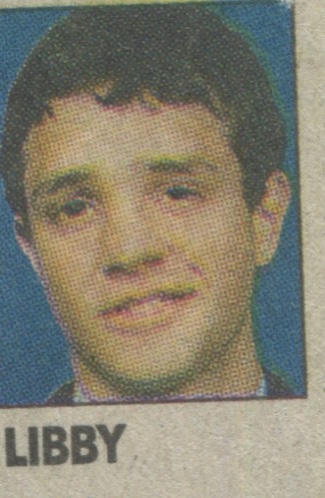
Specialist GEORGE M. LIBBY, My Late Wife's Student


   Looking through my late wife Carol’s belongings, I found a clipped article from “The Pilot,” a newspaper we read while living in Southern Pines, NC (1989—Jan. 2018). The headline read, “Soldier Killed in Afghanistan.”

The late John Chappell had written about Specialist George C. Libby. Carol taught Libby in fourth grade at Aberdeen Middle School, Aberdeen, NC.

Libby died Aug. 20, 2007, at age 23, from a noncombat-related incident, the Army said.

“He died when the vehicle he was riding in rolled over during nighttime drivers’ training near Knost, Afghanistan,” Chappell wrote.

Libby was born in Philadelphia and grew up in Aberdeen. He served as an automatic rifleman assigned to 2nd Battalion, 75th Ranger Regiment at Fort Lewis, Wash.

“George was where he wanted to be, doing what he wanted to do when he died,” said his mother, Nell Allen of Aberdeen, in the article. “George was a fine soldier, and I am proud of him.”

Libby studied computer science for two years at Sandhills Community College and enlisted in the Army in March 2005.

His mother said, “George, when he enlisted, decided he was going to be an Army Ranger. I don’t know how many succeed. At some point, they do tough training. Each thing he approached, he would say something like, ‘Only 30 percent finish it.’ He rose to every challenge presented to him. I was so impressed by my son.

“He took on and beat every challenge in his pursuit of becoming a warrior. This is how I see him: becoming the very best warrior he could, for the United States Army. That sounds a little corny, but that’s how I feel.”

Valerie Avent Libby, of Tacoma, Wash., released this statement after learning of Libby’s death:

“What you need to know about my husband is that he was a good and loving person. He died for your freedom, for all of our freedom. Freedom is not free, and it comes at a high price. George paid that price with his life. … George joined the Army because of Sept. 11. He believed in this mission, and I believed in him.”

Libby was on his second deployment in support of the war on global terrorism and was posthumously awarded the Bronze Star.

Surviving also at the time of his death were his father, Thomas M. Libby, Jr.; a brother, Ira Allen Libby, 20; and a sister, Rebecca Lynn Libby, 16.

Saved with the news article was a torn envelope. On that envelope Carol had written, “My Aberdeen Middle School 4th grade student George Libby died on Aug. 20, ’07 at age 23 in the Army in Afghanistan. He was a precious child.”

Monday, May 11, 2020

Living during the Coronavirus 'Divide'

My finances have not been affected directly by COVID-19 (the coronavirus) because I am retired. But some folk are experiencing tough times.  
  

“I heard that we are all in the same boat, but it’s not like that,” someone said. “We are in the same storm, but not in the same boat. … For some, quarantine is optimal. A moment of reflection, of re-connection, easy in flip flops [taking life easy], … for others, this is a desperate financial and family crisis.”
   

We’re not in the same boat, the writer said,  because the coronavirus stay at home policy causes many that live alone to face more loneliness while others have family with them.
   

“Some want to return to work because they don’t qualify for unemployment and are running out of money,” the writer said. “Others want to kill those who break the quarantine.
  

“Some are at home, spending 2-3 hours/day helping their child with online schooling while others are spending 2-3 hours/day to educate their children on top of a 10-12 hour workday.”
  

Some have died from coronavirus; some don’t seem to think it’s a big deal, the writer said. Some have faith in God and miracles. Others say the worst is yet to come.
  

The writer concluded, “So, friends, we are not in the same boat. … We are all on different ships during this storm, experiencing a very different journey. Realize that and be kind.”
  

An animation shows Buggs Bunny wearing a medical mask and Daffy Duck without a mask. Buggs puts a poster on a tree. The poster reads “Shut it down.” Daffy Duck slaps a poster over it. Daffy’s poster reads “Open it up.”
  

That’s how many feel about reopening businesses labeled “nonessential.”
  

America is suffering a “great divide” over the coronavirus, a virus discovered only months ago. Scientists work feverishly on a vaccine to protect against what some call The Corona.
  

Some say keeping healthy people “locked down” prevents development of an immune response needed to establish nationwide immunity to coronavirus.
  

That idea is based on what happens when a disease attacks a herd of animals. To develop a “natural herd immunity,” one lets a virus attack the herd. Some animals die, but others develop immunity to the disease.
  

Drs. Carl T. Bergstrom and Natalie Dean say, “The coronavirus moved so rapidly across the globe partly because no one had prior immunity to it. Failure to check its spread will result in a catastrophic loss of lives. Yet some … are advising that the most practical course of action is to manage infections while allowing so-called herd immunity to build.”
  

Those doctors advise against letting “herd immunity” build because many people may die while the herd builds immunity. They indicate that social distancing and staying at home are good, at this time.
  

Developing immunity against coronavirus requires actually being infected with it. “Prior infection has to confer immunity against future infection,” Bergstrom and Dean say.
  

On the other hand, Dr. Lee Templeton, a Christian dentist, says many die each year during flu season.
  

“All medically knowledgeable people realize this is an almost annual occurrence,” Templeton says. “Fear has replaced faith and commonsense. … The news media foments fear using death numbers. … If flu deaths were always on the news, it is likely that panic would result from that too. The Christian worldview has taken a hit in the last 50-75 years. That view holds that faith in God casts out fear.”
  

How can we exhibit Christian faith during the coronavirus epidemic?  
  

The Rev. Dr. Christian Hofreiter of Austria writes, “In the Old Testament we find very strict quarantine regulations for those suffering of infectious diseases (see Leviticus 13). So, when Christians follow government and medical advice to, say, drastically reduce all social contacts, this is not an expression of unbelief (as though God did not have the power to protect or heal us). Rather, it is a demand of wisdom and, especially, of neighbourly love. The equation is simple and sobering: The flatter the rate of viral infection progresses, the smaller the number of vulnerable people who will die. Wherever we can contribute to that outcome, we should!”
  

Hofreiter continues, “One of the best things we can do is remember just how great, how good, how strong and mighty, how faithful our God truly is. … Personally, I find it most helpful in such situations to meditate on verses of Scripture that I know by heart, that I think through, pray through, feel through, chew through, carry in my heart, and digest inwardly. For example, the 23rd Psalm. Do you know it by heart yet?”
  

“The Lord is my shepherd … I will fear no evil: for thou art with me; thy rod and thy staff they comfort me” (from Psalm 23, KJV).